

Naaien met de hand – 9 tips + bonus tip
Inhoudsopgave
- Tip 1: Keep your thread shorter when sewing by hand
- Tip 2: Wash your hands more often
- Tip 3: Use thread conditioner
- Tip 4: Take a coffee, tea, or… break
- Tip 5: Use a needle puller for thick fabrics
- Tip 6: Choose the right needle for hand sewing
- Tip 7: A threading aid is always welcome
- Tip 8: Use the right stitches for hand sewing
- Tip 9: To secure or to knot?
- Bonus tip: Use your fingers
Estimated reading time: 7 minutes
To make hand sewing more enjoyable and easier, we have created this page with 9 tips specifically for you.Tip 1: Keep your thread shorter when sewing by hand
Hand sewing can be tricky because the thread tangles so easily. The solution is simple: by using a shorter thread, it is much less likely to knot up. A good rule of thumb is the length of your forearm. Hold the thread in your hand and cut it off at the level of your elbow…. Cut the thread with thread snips or fabric shears and use a thimble to protect your fingers. If you sew or embroider by hand frequently, you may develop a small sore on the finger you use to push the needle through.Tip 2: Wash your hands more often
Wash your hands regularly to get rid of sweat and heat. If you’re like me and get super concentrated while sewing, your hands can become warm and clammy. This makes your thread act up and knot constantly. Fortunately, there’s a simple fix: wash your hands! Washing them cools them down, allowing you to continue sewing smoothly.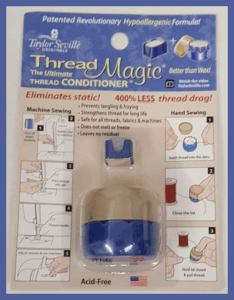
Tip 3: Use thread conditioner
Thread conditioner is a great product to make hand sewing easier, especially for stiff fabrics or materials that are hard to pierce. Or simply because it works so well! Our thread conditioner is called Thread Magic and the name fits perfectly. Thread Magic helps prevent twisting and fraying, leaves no residue, is acid-free, won’t melt or freeze, and is safe for all fabrics, threads, and machines. Thread magic garenconditioner also used frequently by quilters…Tip 4: Take a coffee, tea, or… break

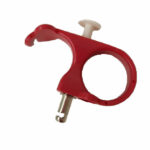
Tip 5: Use a needle puller for thick fabrics
Tip 6: Choose the right needle for hand sewing
Just like with a sewing machine, choosing the right needle makes hand sewing much easier. There are many types of hand needles, roughly divided into five categories: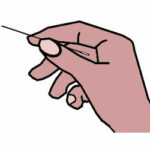
-
- Needles for ordinary fabrics (garment sewing, etc.)
-
- Specialty needles for very thick fabrics, leather, etc.
-
- Basting and tailor’s tacking needles
Tip 7: A threading aid is always welcome
Needles with large or long eyes are easy to thread, but those with small, short eyes can be a real struggle! There are several types of needle threaders on the market. Check out our range here. The most famous is the classic “Wilhelmina” or “Grandma” style wire threader, but there are also others like the Desk Needle Threader or specific versions for sewing machine needles.Tip 8: Use the right stitches for hand sewing
-
- Hand backstitch
-
- Basting/Running stitch
-
- Herringbone stitch or blind stitch
-
- Ladder stitch (invisible stitch)