

Table of Contents
- How to Iron Velvet Without Crushing the Pile
- Why Is Velvet So Delicate?
- Can You Iron Velvet?
- What Is a Velvet Board?
- How to Use a Velvet Board
- More Than Just Velvet: Also Useful for Tailoring and Applying Interfacings
- Suitable For
- Common Mistakes When Ironing Velvet
- Why a Velvet Board Is Essential for Luxury Fabrics
- Conclusion
- Frequently Asked Questions About Ironing Velvet
Estimated reading time: 8 minutes
Learn how to press velvet, velour and coating fabrics without crushing the pile
How to Iron Velvet Without Crushing the Pile
Velvet is making a big comeback. It is appearing more and more frequently in dresses, blazers, skirts, eveningwear and even luxurious coats. Its rich appearance and soft texture make velvet a favourite among both home sewists and professional makers. However, it is also one of the trickiest fabrics to work with. Many people only discover when they start ironing that the beautiful pile can suddenly become flattened or develop unwanted shiny marks. Fortunately, this can easily be prevented by using the right technique and a velvet pressing mat.Why is velvet so delicate?
Velvet, velour and other pile fabrics consist of thousands of tiny upright fibres that create their characteristic soft appearance. When these fibres are compressed by heat and pressure, they can become permanently flattened.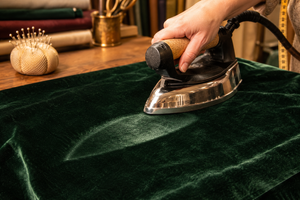
-
- Shiny marks
-
- Flattened pile
-
- Irregular structure
-
- Imprints from seams and hems
-
- A less luxurious fabrid appearance
Can You Iron Velvet?
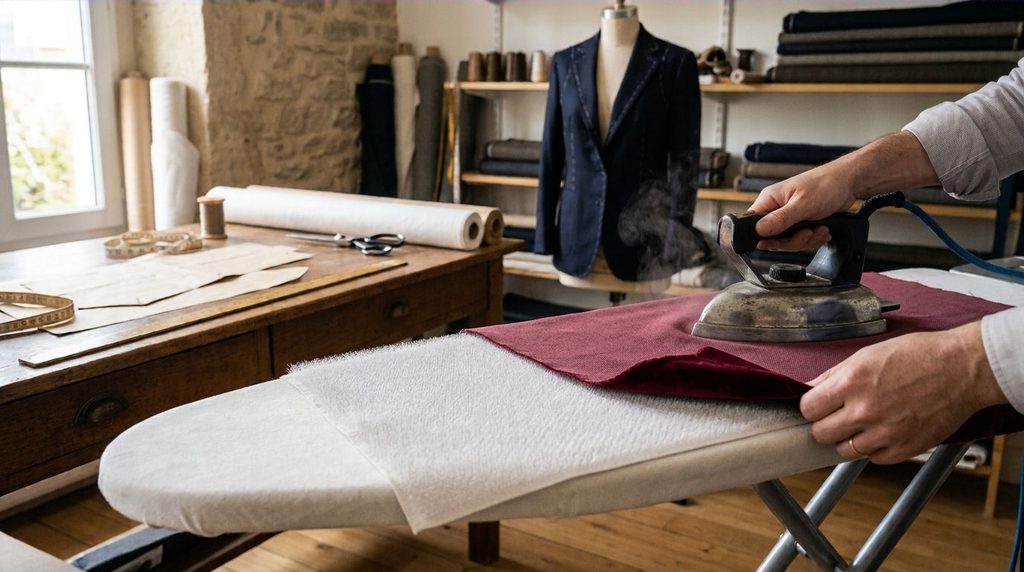
Yes, absolutely. Velvet requires a different approach from cotton, linen and other smooth fabrics. The aim is to remove creases without damaging or flattening the pile.Important guidelines
-
- Use as little pressure as possible.
-
- Always test on a scrap piece of fabric first.
-
- Preferably use steam.
-
- Do not iron any area for longer than necessary.
-
- Avoid direct contact between the pile and a hard surface.
What Is a Velvet Board?
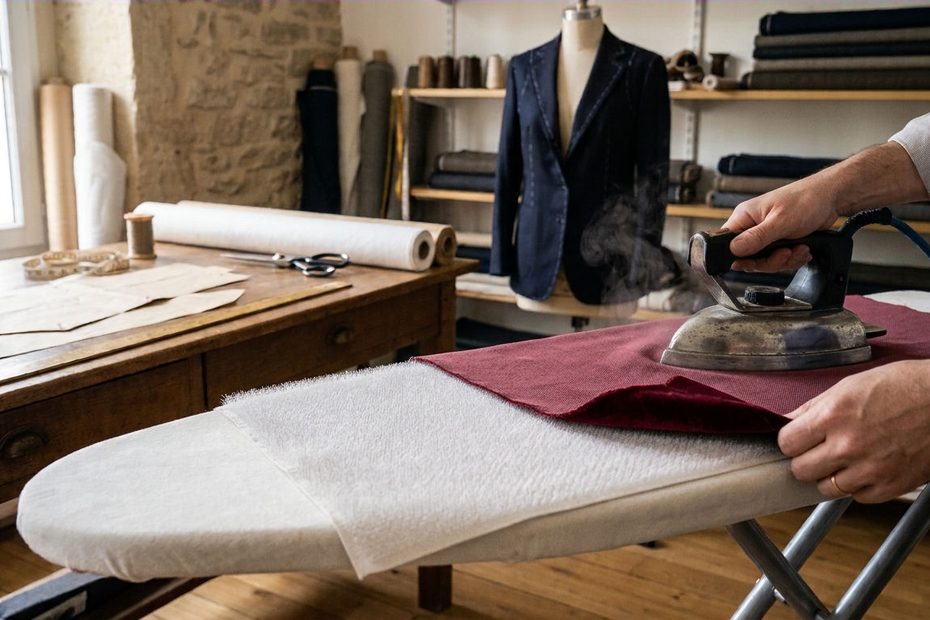
A velvet board, also known as a needle board, is specially designed for ironing and pressing velvet, velour and other pile fabrics. The mat consists of thousands of fine plastic pins. When you place the fabric face down on the mat, the pile fibers sink between the pins. This allows the pile to remain upright while ironing. The result: No flattened pile
Less chance of shiny areas
More professional finishing
Less chance of marks from seams and hems
For anyone who regularly works with velvet, a velvet board is an essential tool.
How to use a Velvet Board
Step 1: Place the Fabric Correctly
Lay the velvet fabric right side down on the velvet board. The pile should sink gently between the needles.Step 2: Select the right temperature
Always check the fabric’s washing and ironing instructions. Modern velvet fabrics can be made from cotton, viscose, polyester or a blend of different fibers.Step 3: Apply minimal pressure
Let the heat and steam do the work. Applying firm pressure is usually unnecessary.Step 4: Use steam
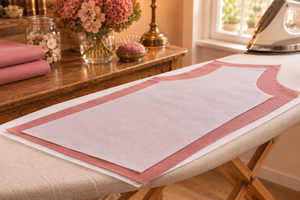
Steam helps remove creases, so there is no need to apply additional pressure to the pile.More than just velvet: also useful for tailoring and applying interfacing.
-
- Vlieseline
-
- Woven Interfacing
-
- Form Tape
-
- Coat Canvas
Suitable for
A Velvet Board or Needle Board can be used for:-
- Velvet
-
- Velours
-
- Panne velours
-
- Ribbed Velvet
-
- Woolen coat fabrics
-
- Bouclé
-
- Mohair
-
- Boiled wool
-
- Teddy fabric
-
- Sherpa Fleece
-
- Fabrics to which interfacing is applied
-
- Fabrics reinforced with coat canvas or other types of interfacing.
Common mistakes when ironing velvet
Too much pressure
This is the most common mistake. Excessive pressure can damage the pile and cause permanent shiny marks.Ironing on a standard ironing board
The pile is pressed down between de fabric and the ironing board.Using an excessively high temperature
This can cause shiny marks that often cannot be removed.Skipping a test swatch
Not all velvet fabrics react in the same way to heat and steam.Why a Velvet board is essential when using Luxury fabrics
More and more sewists are working with luxurious fabrics such as velvet, wool coating, bouclé and mohair. These fabrics require careful handling when pressing and ironing. A standard ironing board often does not provide sufficient protection for these fabrics. A velvet board helps preserve the fabric’s volume, texture and appearance, while still allowing you to press, apply interfacing and finish your garments to a professional standard. This makes the board a valuable tool for both beginner sewists and experienced dressmakers.Conclusie
A velvet board is far more versatile than its name might suggest. Of course, it is ideal for pressing velvet, velour and other pile fabrics, but it also proves invaluable when applying fusible interfacing, coat canvas and other types of interlining. Do you regularly work on blazers, jackets, coats or overcoats? A needle board helps preserve both the quality of the fabric and the finish of the garment. It prevents flattened fibers, shiny marks and unwanted imprints, while still allowing you to apply sufficient pressure and heat for a professional finish.FAQ about ironing Velvet
Yes, but be careful. Velvet is a delicate fabric with a pile that can easily become flattened. Use as little pressure as possible and preferably work with steam and a velvet board. The needle board is also suitable for applying fusible interfacing and other reinforcement materials.
A Velvet board, also known as a needle board, is a special mat with fine plastic pins. The velvet fibers sink between the pins, protecting the pile while ironing. The mat most closely resembles the rough, hook side of Velcro.
Shiny marks are usually caused by excessive heat or pressure during ironing. Dark-coloured fabrics are particularly prone to this. A velvet board helps prevent these marks. **ALWAYS iron on the wrong side of the fabric.
Yes. A velvet board is suitable for various pile fabrics, including velour, crushed velvet and corduroy. Wool coating fabrics can also be pressed very effectively on a velvet board.
No. A velvet board can also be used for wool coating fabrics, bouclé, mohair, teddy and sherpa fabrics, as well as other bulky materials.
Yes. A velvet board is ideal for applying fusible interfacing and other reinforcement materials to delicate fabrics. It helps preserve the texture and structure of the outer fabric during pressing.
Yes. When working with hair canvas and other interlinings, a velvet board provides extra support. This is especially useful when making coats, blazers and suit jackets, as it helps keep the outer fabric looking its best during pressing.
A Velvet board is suited for: – Velvet – Velours – Panne velours – Ribben velvet – Woolen coat fabrics – Bouclé – Mohair – Teddy and sherpa fabrics – Fabrics on which Vlieseline and other interfacings are used
It’s not an essential tool, but it is a worthwhile investment. Especially when working with luxury fabrics, interlinings, shoulder pads and tailoring techniques, a velvet pressing mat can help you achieve a more professional finish.
Place the fabric right side down on the mat. Then use steam and apply as little pressure as possible when ironing. The pile is protected because the fibers settle between the pins of the board.
A regular ironing board can flatten the fabric fibers. A velvet board supports the fabric without compressing the pile, helping preserve its texture and appearance.