

Estimated reading time: 5 minutes
Table of Contents

When making a jacket, blazer or coat, the interlining largely determines how the garment looks and feels. Many dressmakers therefore hesitate between a traditional horsehair canvas and a modern fusible or coat canvas. Both have their own advantages and are suited to different applications. Horsehair canvas or fusible interlining – how do you choose?
In short
- Choose horsehair canvas for traditional tailoring, lapels and bespoke work.
- Choose fusible or coat canvas when speed and easy application matter.
- For many blazers and coats, a combination of different interlinings is used.
- Always make a test sample first to judge the effect of fabric and interlining.
What is horsehair canvas?
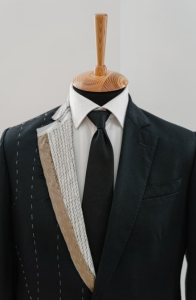
Horsehair canvas is a traditional sew-in interlining that generations of tailors have gladly used in high-quality tailoring and bespoke work. You usually apply this interlining by hand, or sometimes by machine. It is often pad stitched onto the front panel (pad stitching) because you want to shape lapels, chest areas and front panels.
Horsehair canvas is known for:
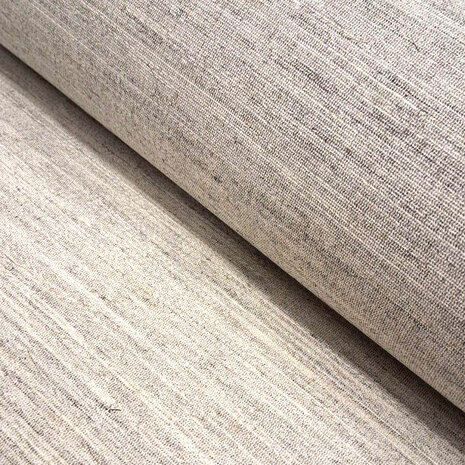
- natural resilience
- beautiful shaping of lapels and chest area
- a long lifespan
- a luxurious look
- a natural drape of the garment
Use it therefore in bespoke jackets, menswear, couture and high-quality coats.
In English-language patterns, books and videos, horsehair canvas is often referred to as hair canvas, horsehair canvas or chest canvas.
To support front panels and other parts of a jacket, you often also use coat canvas or fusible interlining.
What is fusible interlining?
Fusible interfacing or coat canvas is an interlining with an adhesive layer that is attached to the fabric using heat and pressure. Modern fusible interlinings are available in various thicknesses and materials: first there are light Vlieselines or Vilenes, then there are firm woven interlinings, all with their own handle and application.
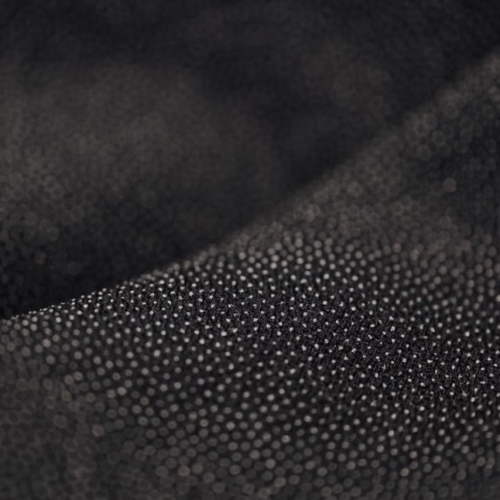
Advantages of fusible interfacings are:
- faster to apply
- no manual pad stitching needed
- suitable for many garment projects
- even support
- easy to apply
Examples of commonly used plakdoek and coat canvas are soft woven viscose interfacing, natural interfacing Polyquick, H410 and G405.
When should you choose horsehair canvas?
- because you want to achieve a classic bespoke result
- to shape the lapels
- you are working on couture or bespoke tailoring
- you are looking for maximum shape retention and lifespan
- you appreciate the craftsmanship of traditional tailoring
However: especially for chest pieces, lapels and front panels, horsehair canvas offers possibilities that are hard to replace entirely with fusible interfacing.
When should you choose fusible interlining?
- when speed is important
- if you are making a modern ready-to-wear or hobby project
- you have no experience with pad stitching
- provided the fabric needs only limited support
- you want neat, reliable reinforcement without much extra work
For many blazers, jackets and coats, a good-quality fusible interfacing or coat canvas delivers excellent results.
Can you combine horsehair canvas and fusible interlining?
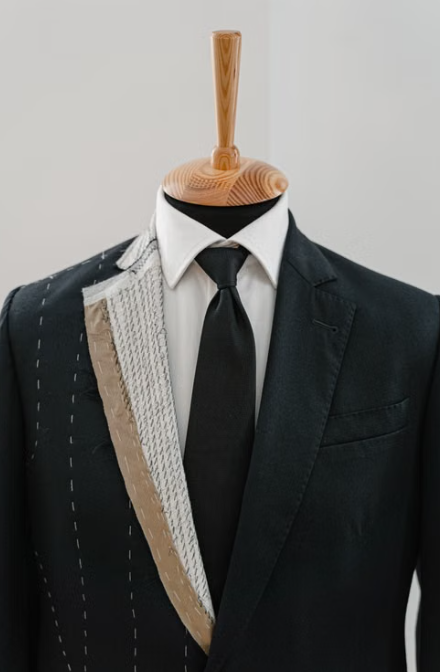
Yes. In fact: many experienced dressmakers combine different types of horsehair canvas, coat canvas and interfacings in one garment.
For example:
- horsehair canvas in the lapels and chest area
- a woven interfacing with a coating or adhesive layer used in the front panel
- a lighter Vlieseline or Vilene is usually enough in the back panel
If you combine different materials, you get exactly the right balance between firmness, shape and wearing comfort.
Horsehair canvas or fusible interfacing, how do you choose? Each part gets its own interlining!
Which choice is best?
There is no universally right choice. The best interlining depends on the following factors:
- the fabric
- the design
- the desired look
- your experience
- the application technique
Not sure? Always make a test sample first. By making a small test swatch with your fabric and interlining, you can often see right away what result to expect.
Keep reading or get started right away?
Want to know more about the different types of interlining and their applications? Then take a look at our categories Horsehair Canvas, Coat Canvas and Couture Interlining, or use the Vlieseline Selection Guide to find the right interlining for your project.
Share this post: