

Estimated reading time: 12 minutes
Haberdashery for wedding dresses and evening gowns
Table of Contents
- Bridal laminate interfacing, boning, strong invisible zippers and more
- Bridal laminate and other bridal interfacing
- More bridal interfacing
- Boning for extra reinforcement
- Zipper for your bridal gown
- Loop tape and fabric buttons for a brides dress
- Thread and needles for your wedding dress
- Pins or Wonder Clips?
- Bra strap keepers and snaps for your brides dress
- Marking bridal fabrics
Bridal laminate interfacing, boning, strong invisible zippers and more

When you are creating your own wedding dress (or one for a bridesmaid), you will naturally wonder which haberdashery you need. On this page we go into more detail about all the haberdashery and reinforcement / interlining that are suitable for your beautifull wedding dress. An extra strong invisible zipper, nice fine thread, boning and boning channel tape are things you will definitely need. And depending on your design you will also use loop tape and fabric buttons, transparent snaps or bra strap holders for your bridal gown. For making bridal wear you also use special sewing supplies such as thin, sharp pins or Wonder Clips, sewing machine and hand sewing needles, and marking products for drawing on your fabric.
Bridal laminate and other bridal interfacing
When you are sewing a wedding dress, you will often need a somewhat firmer interfacing. A brides dress is usually firmer than a collar on your blouse. Wedding dresses, and also cocktail or evening wear, generally have a bodice reinforced with interlining and boning.

How do you achieve that? Exactly! With bridal laminate…
There are three different types. One of them is fusible, the other two you sew into your bodice. The fusible bridal laminate is firm yet thin, and because you fuse it on, it gives your fabric a lot of extra firmness. That same firm bridal laminate is also available as a sew-in version. Because you sew it in with the fabric, the result is different. If you have a thin, flimsy fabric, the best choice is the double-sided brushed bridal laminate. Double-sided brushed gives you a little volume, which benefits thin fabrics. The fuzzy brushed side also holds your fabric in place, as it were. The unbrushed side then sits against the lining. Available in normal and supple
Speaking of lining: in the tops of wedding dresses, cotton lining is often used because it absorbs moisture well and doesn’t feel cold when damp, which regular lining does.
More bridal interfacing
Depending on your design and your fabric, you may not need a firm bridal laminate. No worries, there is much more to choose from in the world of interfacing / interlining!
If you want to fuse, you can go for a viscose plakdoek (fusible woven interlining), fusible cotton G700 interfacing, interfacing G710: a thin fusible cotton batiste, or a G785. This thin woven polyester interfacing works nicely on many different fabrics.
Of course you can also go for a non-woven interfacing. The types in the paragraph above are woven. An H180, H200 or other types are usually non-woven fleeces from Vlieseline / Vilene. These are made of polyester and available in various thicknesses.
Choosing interfacing is not that simple: read our Vlieseline Selection Guide or get in touch for personal advice.
Boning for extra reinforcement
When we talk about haberdashery for your bridal gown, we certainly must not forget the boning! Many wedding dresses are given extra reinforcement with it. Cocktail wear and lingerie such as bustiers or corsets are also made firmer with boning.
Simply put, there are two versions: boning that you sew on and boning that you slide into a channel. We have three types of boning: spiral steel boning, plastic sew-in boning and plastic flat boning. The spiral boning is made of metal and you slide it into our boning channel tape.

Plastic boning
Then there is the plastic boning that you can sew in. Rigilene or Multitex boning, as it is sometimes called. This type has a number of plastic rods woven together with plastic. The round rods side by side make a flat boning, and on both sides there is a narrow stitching strip. Use a zipper foot when applying it.
Type number three is also plastic boning, but a flat strip of white plastic, 6 mm wide and 1.5 mm high. You also use this type together with our boning channel tape.
How do the types differ from each other? That is not so easy to describe, but I will give it a try: the spiral boning is about as firm as the Rigilene, but it is more flexible. It bends better with the wearer of the garment. And it bends differently. The channel tape also contributes to the flexibility. If you want to know exactly, you will have to feel it for yourself…
The plastic flat boning is the firmest. It is a flat plastic rod, so quite rigid. Almost firm enough for a hoop skirt. It hardly bends sideways. A big advantage of this type compared to spiral boning is that plastic boning is washable… Read more about boning on the page Boning tape, caps and channel tape…
Zipper for your brides dress

extra strong invisible zipper
When you sew a wedding dress, there is usually a zipper in it. Even if there is a button closure with loop tape, there is usually a zipper behind it. In a wedding dress you don’t want to see a zipper, except in the one in the picture next to this text. Because you want an invisible zipper, an invisible (concealed) zipper is often chosen.
However, the invisible zippers you can buy everywhere are not that strong. Our type of invisible zippers already has a firmer tape than average and they are a touch coarser. A standard YKK invisible zipper is size 26, our type is YKK size 34. So already a bit stronger, and they have a woven tape rather than a transparent, jersey-like tape that wears out faster.
But we’re not done yet, there is also a special invisible zipper for bridal wear. Again from YKK, and the size is 56. Sounds a lot firmer, doesn’t it? These extra strong invisible zippers also have a sturdy woven tape…
Extra strong invisible zippers are indispensable haberdashery for your wedding dress!
Loop tape and fabric buttons for a wedding dress

As a bride you usually get help getting dressed. If you have a button closure with a whole row of small buttons and loops to fasten, that is almost a necessity. These buttons are usually on the back of the dress. The loop tape we sell has elastic loops and you can use it together with the 11 mm fabric buttons from the brand PRYM.
These smallest-size fabric buttons are easy to make yourself. The easiest way is with the PRYM tool for fabric-covered buttons. Fabric-covered buttons are also called Picpac buttons.
Thread and needles for your wedding dress

Do you need special thread when you make a wedding dress? In itself you can sew your wedding dress perfectly well with all-purpose sewing thread. But if your fabric is nice and thin, that is a bit on the thick side.
All-purpose sewing thread is no. 100. If you take a thread that is a little finer, you get to no. 120 or 150. And that suits your organza, chiffon or silk beautifully…
Alterfil sewing and serger thread
In no. 150 we have a special sewing and serger / overlocking thread with an anti-pucker coating called Alterfil S. The anti-pucker coating works by pressing the seam with the iron. The heat activates it and it sets your stitching, as it were. Now “setting” sounds very stiff, but it isn’t: you don’t see the coating and you can even easily remove your stitched seam again. No problem to unpick it with your seam ripper…

Amann Group Mettler
Overlock thread for your wedding dress
Serger or overlocking thread is also certainly worth your attention when you buy haberdashery for your wedding dress. If you want to finish the hem with a rolled hem on the serger, a shiny thread looks very beautiful. If you are looking for a good, strong thread that has a sheen, consider Polysheen. Polysheen is originally an embroidery thread, but because it is polyester it is very strong. The overlocker has no problems with this thread, it is a little smoother than normal thread. If you are used to Serafil serger thread, you can handle Polysheen just fine.
Want to do some overlocking with fine thread? You can also overlock very well with Alterfil S. The spools are 1000 m, so they don’t run out quickly. If you want a bit more, you can go for Trojalock. These come in a box of 4 spools of 2500 m each in no. 120. And the largest spools of serger thread are Serafil, which are sold per spool and hold 5000 m.
Thread is one of the important haberdashery for a bridal gown, because good quality runs like a red thread through this story… ?
Pins or Wonder Clips?
You would rather not stick a thick pin into your beautiful thin and often more expensive bridal fabric. You might make a hole that won’t come out again, what a waste!
No worries, there are also thin pins. Normal pins are 0.6 mm thick. The standard PRYM glass head pins, for example, are 30 x 0.6 mm. If you want thinner ones, we sell these from the brand CLOVER, in 0.5 and 0.4 mm thickness. The latter are very flexible and I would use them for silk or voile fabrics. If you have a thin, soft satin, 0.5 mm thick is fine. Clover pins are a fraction longer: 36 mm or 48 mm…
Wonder Clips
And if you would rather not pin at all, CLOVER has Wonder Clips. Wonder Clips are a bit like clothes pegs, but different. The underside is flat so you can sew right alongside them without the fabric lifting. Wonder Clips come in mini, regular and jumbo. A good size for every job. Jumbo is not so suitable for bridal wear; they are handy when you have many layers on top of each other and use, for example, volume fleece. Such as when making a winter coat. For wedding dresses, regular and mini are better. Have a look in the shop for the different types.

Bra strap holders and snaps for your bridal gown
Sometimes, in the category of wedding dress haberdashery, you need a snap to fasten something, for example a piece of lace that has to fall over the zipper. Then you want an invisible closure, so you pick a transparent snap. These sew-on snaps are truly transparent in sizes 7 and 10 mm diameter. There are also transparent snaps of 15 and 21 mm, but these are not really transparent. The colour is more milky white.
Hiding your bra strap

With bra strap holders you can attach your bra strap to the shoulder of your dress. Especially if you have narrow shoulders in your wedding dress, you don’t want to see the bra straps sticking out. Doesn’t look so nice in the wedding photos, does it?
A bra strap holder is basically a simple piece of tape with a snap on it. You attach it to the inside of your dress and when getting dressed you slide your bra straps into it. Close the snap and your strap is, as it were, attached to your dress.
Marking bridal fabrics
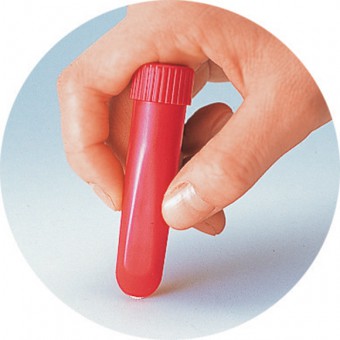
What can you use for marking on bridal fabrics? Well, a lot of different products. Everyone has their own preference. What we sell most for this are the purple vanishing markers and the standard tailor’s chalk. Also chalk powder with a Chaco liner chalk wheel from Clover. It depends on what you prefer.
What is important is that you test it on a scrap first before you mark the whole dress with it. Suppose you take a vanishing marker and you have exactly the fabric where it won’t come out or where it stays visible for a long time. Then you can start your wedding dress all over again. So: test, test, test!
Read on below about all our tailor’s chalk variations and vanishing pens / markers:
Share this post: